
Bi-Weekly Wellbeing Brief: 5/18/2026
May 18 Overview
Heads up: this brief is longer than usual. We think that says something about the state of our sector. Over the last two weeks, our inboxes have circulated around the central theme of burnout. This is likely in part due to the Center for Effective Philanthropy reinforcing—for the fourth year in a row—that burnout is one of the sector’s most pressing challenges. Our Founder, Loretta Turner, shared her honest thoughts on this reporting.
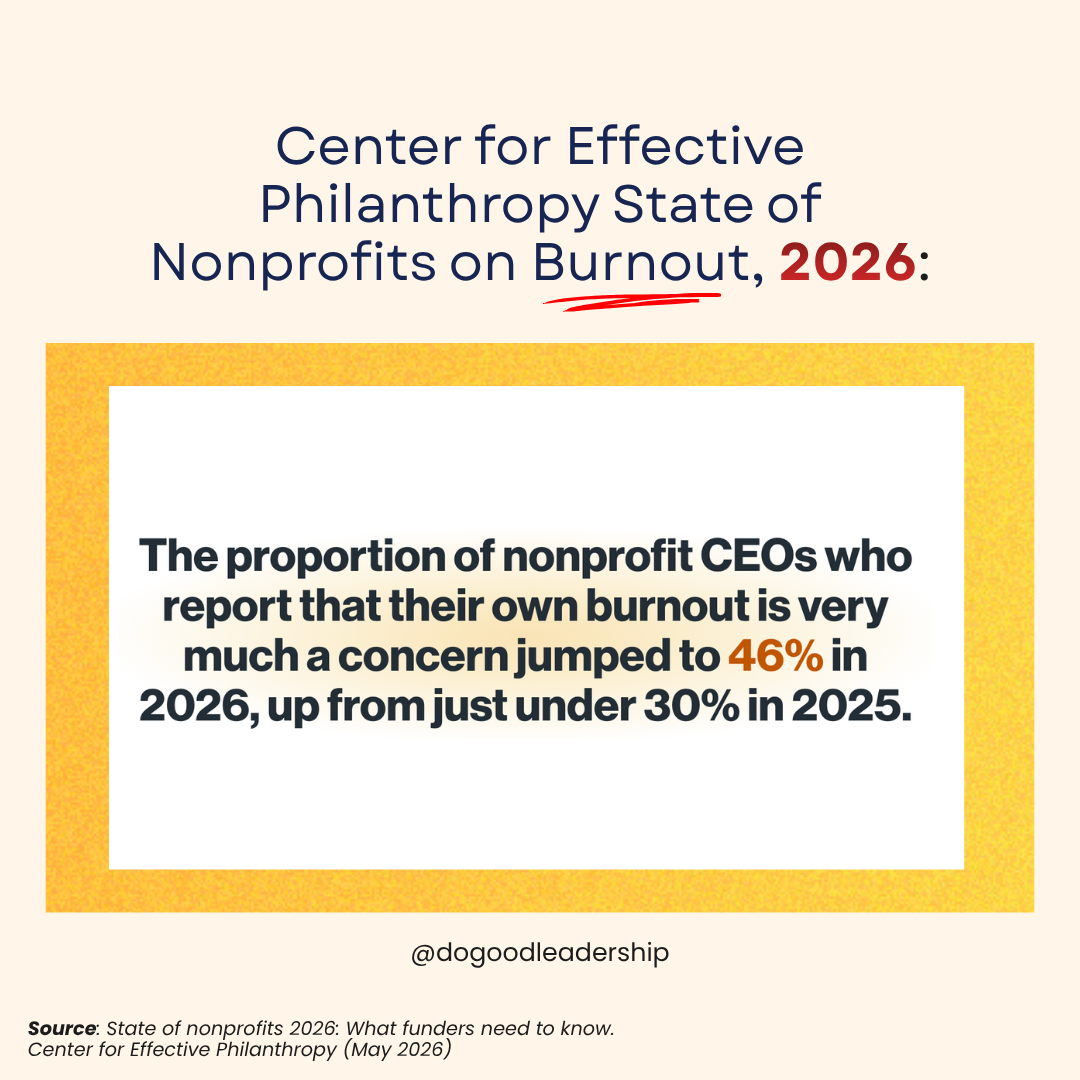
Screenshot from the Center for Effective Philanthropy's 2026 State of Nonprofits: What Funders Need to Know report.
🪫 The B-word: What’s happening with Burnout?
Do Good Leadership Collective is in the middle of our Who Burns Out, and Why? campaign. This includes a white paper that takes a deep dive into the identity-based realities of burnout, an infographic, and free resources for supervisors who are ready to lead conversations about burnout in their workplace. Join us on June 10th for a live conversation on our research.
Axios (Detroit) reports that in Michigan, nonprofit mental health providers are reporting staffing shortages fueled by burnout, as demand for care rises while organizations struggle to compete with private-sector wages and benefits.
Reporting from Fortune shows that, across the country, broader workplace research continues to show that burnout pressures are often sharpest in mission-driven environments, where workers carry both operational pressure and emotional responsibility.
Leaders are beginning to challenge how burnout is measured. New commentary argues that traditional burnout surveys often focus too heavily on individual symptoms, while missing deeper drivers like inequity, role confusion, lack of voice, unstable funding, and organizational culture.
Globally, burnout remains a humanitarian issue. In Ukraine, funding opportunities are now specifically being created to prevent burnout among social service workers operating amid prolonged crisis and community trauma.
Meanwhile, one of the hardest realities remains wellbeing program implementation. Benefits and Pensions Monitor report that, even when nonprofit leaders understand the need for staff wellness, limited budgets, staffing shortages, and pressure to prioritize programs over people often make wellness efforts difficult to launch.
💭 Innovations & New Thinking
R&R: The Rest Of Our Lives is currently collecting national research on what happens when nonprofit teams take an intentional full week away from work. Their work continues to build evidence that rest—when practiced collectively and structurally—can strengthen morale, trust, and long-term retention. Submit your insights here.
Inspired by leaders like The Healing Trust, more organizations are embracing rest as a critical lever for organizational effectiveness. Their recent “Nonprofit Day(s) of Rest” campaign reminds the sector that caring for the people doing the work is not separate from impact.
Fund the People, in partnership with All Due Respect, released new case studies with frameworks designed to help organizations eradicate burnout through stronger compensation, healthier workloads, more transparent leadership, and improved workplace culture.
Healthcare systems are experimenting with parental support packages, recognizing the connection between caregiving stress, burnout, and retention.
Philanthropic leaders continue to offer practical structural fixes: redesign overloaded roles, strengthen compensation, improve succession planning, and build organizational systems that make wellbeing sustainable.
📍 Local to San Diego
In San Diego, we continue to track the recent proposed budget cuts to arts and culture funding and the implications it will have for our nonprofits and its workforce.
✅ Quick Takeaways
For the 4th year in a row, burnout remains one of the top findings in national nonprofit research.
Burnout continues to worsen in high-demand sectors like mental health, humanitarian response, and community services.
Traditional burnout metrics may miss deeper structural drivers like inequity, unstable funding, and organizational culture.
Rest is increasingly being treated as strategy, not self-care.
Below is a question that we’re posing to our community after reading the Center for Effective Philanthropy’s State of Nonprofits 2026: What funders need to know
Do Good Leadership Collective is a San Diego-based consultancy that helps social impact professionals Do Good and Be Well.