

Cultures of Wellbeing: The Impact of Trauma & Lived Experience in Nonprofit Leadership

This special edition of our Cultures of Wellbeing blog series was co-written by Jaelene Symington! Jaelene joined the Do Good Leadership Collective team in July 2026 for a summer internship through the Youth Mental Health Academy. Jaelene has a passion for utilizing her experiences to help others, pursuing her faith, and serving her community through volunteer work.
Many people are drawn to nonprofit and social impact work because of personal experiences or a desire to help others:
The nonprofit founder who lived on SNAP benefits her entire childhood…
The program manager who is an immigrant himself…
The grantwriter who raises money for the same cures that saved her daughter's life…
These lived experiences can fuel the passion and empathy necessary to commit to social impact work. But, for some nonprofit professionals, those experiences may include trauma or Adverse Childhood Experiences (ACEs), which shapes how they make decisions, build relationships, hold boundaries, and navigate workplace stress. For nonprofit leaders, understanding how past experiences show up at work can be an important part of preventing burnout, improving nonprofit workplace culture, and supporting colleagues who are committed to emotionally demanding work.
What Is Workplace Wellbeing Strategy?
Workplace wellbeing strategy looks at the organizational conditions that shape how people experience work, and creates custom solutions that support overwhelmed nonprofit leaders. For nonprofit and social impact organizations, this means moving beyond individual self-care and addressing the systems, practices, and culture that can help to improve workplace culture.
For nonprofit organizations looking to reduce staff turnover, prevent burnout, and build healthier and more sustainable teams, investing in workplace wellbeing strategy is a critical focus--especially during times of upheaval and uncertainty. Workplace wellbeing strategy does not come with a one-size-fits-all approach. When done well, these co-created initiatives support new ways of working together that are responsive to people’s needs and the organization's mission and values.
How Can Trauma-Informed Leadership Support Wellbeing?
Oftentimes, nonprofit teams are trained on trauma-informed care for the populations they serve. However, learning how to practice trauma-informed leadership with nonprofit peers is an important step in developing healthier working conditions. According to the National Institutes of Health (NIH), up to 75% of social services, mental health, and community aid professionals have experienced at least one ACE in their upbringing. ACEs include experiences such as abuse, neglect, and household dysfunction. These childhood experiences can shape the way people think, build relationships, and develop life skills into adulthood.
For nonprofit leaders and professionals who have experienced significant ACEs, it is worth considering how those experiences may fuel or hinder their passion for work and help explain behaviors in the workplace.
For example, a leader who has experienced negative reactions to being vulnerable, such as emotional neglect or abuse from a caregiver, may have difficulty being open with her colleagues.
A professional who experienced a lack of safety or security in his childhood may constantly feel on edge at work or lead from a place of scarcity--even when there is no direct threat.
Someone who experienced continuous broken trust in childhood relationships may have difficulty building professional relationships.
These deep psychological experiences can make it difficult for professionals to lead transparently, work collaboratively with others, or manage themselves effectively when faced with stressful situations.
This is where trauma-informed leadership can support workplace wellbeing. Building environments that prioritize psychological safety, create safe spaces for vulnerability, and establish the right conditions for trust-based relationships are critical for leaders who have been impacted by ACEs. Additionally, organizations that provide the right training and resources, such as leadership coaching or access to mental health support, can support their workforce in developing better coping skills to manage their trauma and burnout.
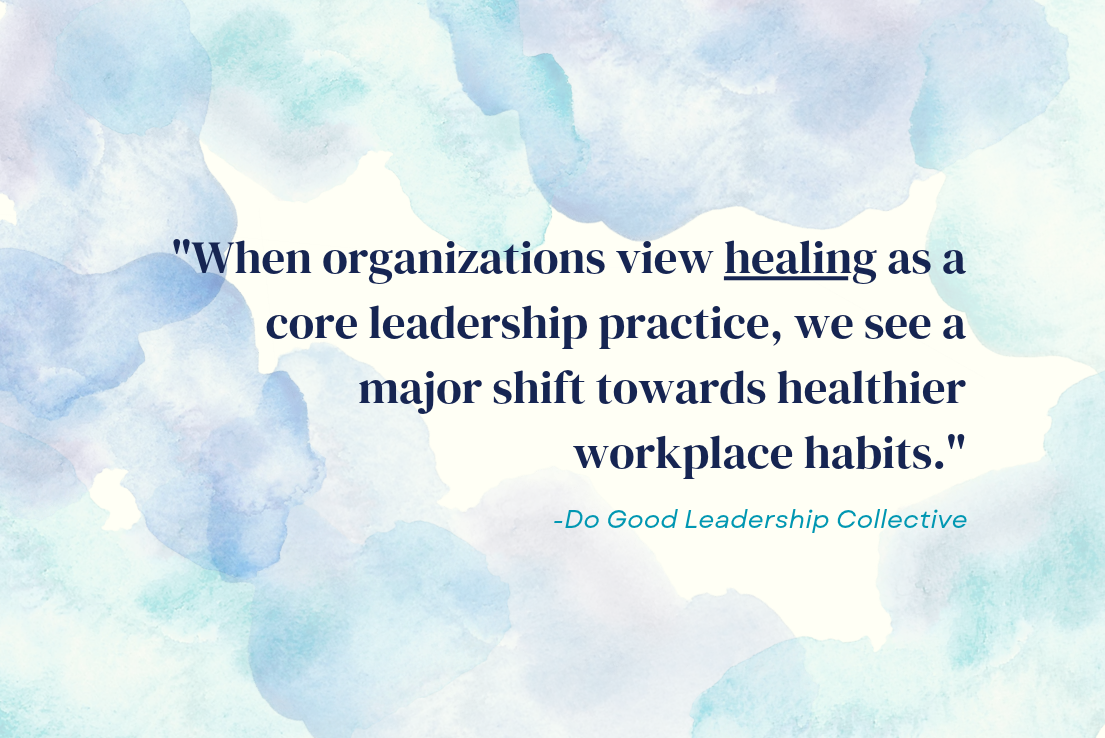
In our work with nonprofit leaders and teams, when organizations view healing as a core leadership practice, we see a major shift towards healthier workplace habits.
2 Questions to Consider
1. Do you notice that you or your colleagues get activated by certain situations with clients or coworkers?
If so, it is time to pay attention to the physical, emotional or mental responses that arise in those moments. There is a chance they are connected to past experiences, particularly when working within situations that are familiar to one’s own lived experience. If you’re noticing this with a colleague, it might be time to ask them additional questions about what they’re experiencing at work.
2. Do you notice that unhealthy conflict is a norm at your organization?
When conflict becomes a recurring pattern in an organization, it’s worth considering how employees with lived experiences of trauma or ACEs are becoming activated. Conflict can bring up past experiences and influence how people interpret situations. At the same time, organizations can unintentionally normalize unhealthy behaviors—such as avoidance, defensiveness, or aggression—that make it difficult for people to feel safe and heard.
2 Action Steps to Get Started
Understanding the impact of trauma is only the first step. Leaders and organizations can take proactive steps to support healthier workplace environments.
1. Explore Trauma-Informed Leadership: Consider training and resources that help leaders recognize trauma responses within one another--not just in the populations you serve. This might include training on psychological safety, burnout, and how vicarious trauma is experienced in the workplace.
2. Proactively Seek (and Provide) Wellbeing Resources: Don't wait for burnout to seek support. Making mental health resources, professional coaches, and peer support groups available and accessible can help impacted leaders with boundaries and coping mechanisms. Creating a strategy that promotes access to trauma-informed resources as a core part of your internal operations is an important step for sustaining your workforce.
Join the Conversation!
If you’re ready to explore trauma-informed leadership training, workplace wellbeing strategy, or new methods to better care for your people, then get in touch. Check out our services page to learn how we can support your team today. If this post resonated with you, share it with your network or continue the conversation!
Resources
Adverse Childhood Experiences Among Direct Support Professionals
The Professional Connection Between Childhood Trauma and Nonprofit Leadership
This blog was edited by Florine Causer, our Strategic Communications & Wellbeing Consultant.